Working Capital PEG Base
The PEG is the normal level of operating working capital (AR + Inventory - AP) required to support daily business operations post-sale.
Determine your trailing 12-month net working capital average. Model Accounts Receivable, Inventory, and Accounts Payable variations to forecast closing price adjustments.
Model 12-Month Net Working Capital Pegs & Close Adjustments
If the net working capital on closing day is higher than the PEG target, the buyer pays the excess cash to the seller. If it falls below, the purchase price is reduced to prevent balance sheet asset draining.
Get an instant AI NWC diagnostic identifying seasonal pitfalls and closing ledger valuation risks.
The PEG is the normal level of operating working capital (AR + Inventory - AP) required to support daily business operations post-sale.
On the closing day, actual delivered NWC is audited. A surplus increases the final sale price, while a deficit reduces it dollar-for-dollar.
Highly seasonal businesses command carefully modeled PEGs to ensure sellers are not penalized for low-season receivables collections.
During a business sale, transactions are usually structured on a cash-free, debt-free basis, with a requirement that the seller delivers a normal level of working capital. This ensures the buyer inherits a company capable of operating from day one without requiring immediate equity injections to fund inventory or pay suppliers.
To establish this baseline, advisors calculate the Net Working Capital (NWC) average over a historical 12-month period, establishing the PEG Target.
On the transaction closing date, actual balance sheet accounts are audited.
Seasonality plays a major role: businesses selling during their high-season peak typically deliver a large surplus, while those selling during low-seasons might deliver deficits. Understanding this flow prevents post-closing disputes.
AIVI advisors use structured workflows to track NWC targets, normalize add-backs, and generate branded client reports before transaction launch.
Im deutschsprachigen Raum ist das Working Capital eine der am stärksten umkämpften Stellschrauben bei Unternehmensverkäufen (M&A). Dieser Working Capital Peg Rechner hilft M&A-Beratern und Verkäufern das Net Working Capital (NWC) über einen rollierenden 12-Monats-Durchschnitt zu berechnen, um den sogenannten PEG-Wert (den normalen Betriebsmittelbedarf) festzulegen.
Weicht das am Stichtag tatsächlich übergebene Working Capital von diesem Zielwert ab, kommt es zu einer kaufpreiswirksamen Anpassung (Surplus oder Defizit).
Quantify Enterprise Values, verify due diligence books, and estimate strategic synergy premiums in real-time.
Model Enterprise Value and EBITDA multiples based on cash-flow parameters.
Reconcile VDR files and CIM statements to check QofE due diligence clawbacks.
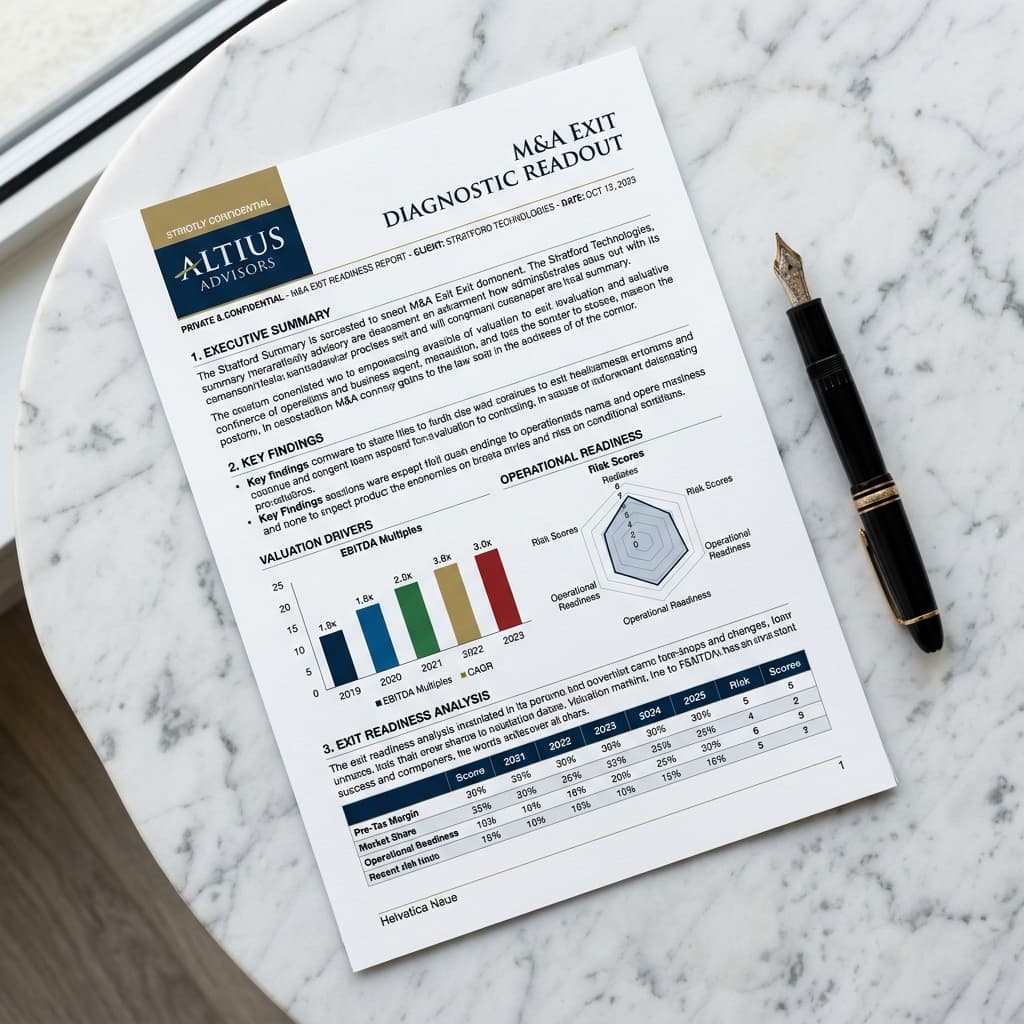
Verify exit-readiness parameters, customer concentrations, and legal roadblocks.
Estimate annual cost reductions and customer cross-sell synergy values.
Leverage branded diagnostic assessments, AI drafting tools, and shared client collaboration channels.

Turn exit diagnostics into structured Confidential Information Memorandums automatically.

Mapstrategic buyer synergies and justify exit premium values across 6 dimensions.
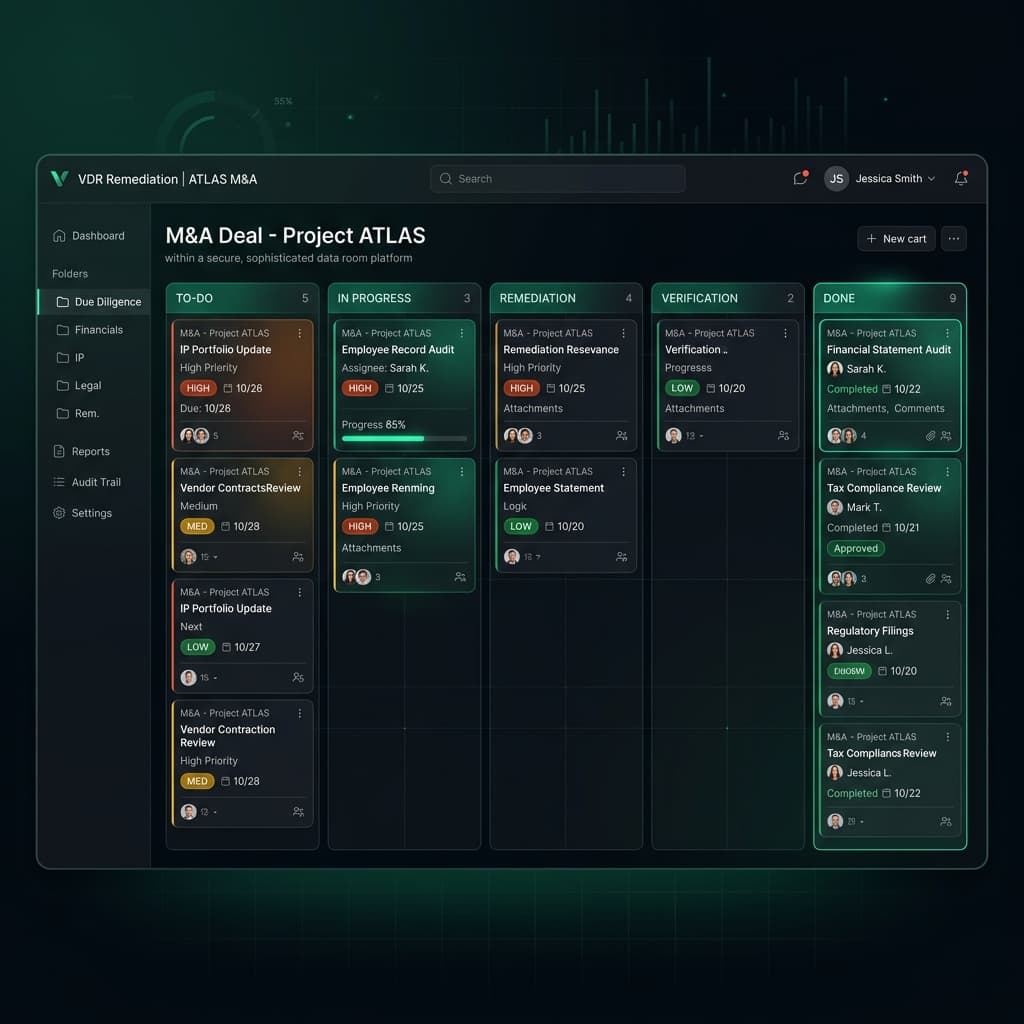
Convert diagnostic risk findings into white-labeled seller remediation workflows.

Guide draft output tone with your boutique firm's custom brand vocabulary rules.
Read advanced articles written by tech corporate advisors covering escrow, EBITDA multiples, and transaction logs.
 M&A Diligence
Step-by-step best practices to structure folders, manage user permissions, and ensure secure buyer access.
 Valuation
A practical breakdown of valuation approaches owners and advisors use before a sale process.
 Deal Structuring
How AI-assisted CIM workflows reduce drafting time while keeping deal materials consistent.