Trailing Multiple Ranges
Valuation multiples represent how many years of cash flows a buyer is paying upfront. Tech sectors command 8x-12x+ multiples, while traditional agencies command 4x-6x.
Estimate your corporate enterprise value and exit multiples instantly. Adjust parameters for industry segment, year-over-year growth, gross margin, and net debt.
Estimate Corporate Enterprise Value & Exit Multiples
Reflects baseline multiples and metrics adjustments in 2026.
Buyers often apply quality of earnings (QofE) reductions for lack of audit track record or high customer concentration. Ensure your ledger matches these multiples parameters.
Get an instant AI-powered deal metrics report based on current market multiples.
Valuation multiples represent how many years of cash flows a buyer is paying upfront. Tech sectors command 8x-12x+ multiples, while traditional agencies command 4x-6x.
Acquirers pay valuation premiums for recurring ARR growth and fat gross margins (>80%), which indicate capital-efficient business scalability.
Transactions are cash-free and debt-free. Acquirers subtract bank debt from the operating enterprise value to yield the final seller equity payout.
EBITDA (Earnings Before Interest, Taxes, Depreciation, and Amortization) is a key proxy for operational cash flow. In merger and acquisition (M&A) transactions, private equity firms and strategic acquirers utilize EBITDA multiples to value private businesses quickly. By applying a multiple to your company's EBITDA, buyers estimate the Enterprise Value (EV).
The EBITDA multiple framework serves as a rapid screening mechanism. Before commissioning expensive Quality of Earnings (QofE) reports or Discounted Cash Flow (DCF) analyses, buyers use EBITDA multiples to quickly establish whether a deal is worth pursuing at the asking price.
Multiples are not static. The valuation premium applied to a business depends heavily on several factors:
AIVI empowers boutique M&A firms and investment banks to generate CIMs, conduct instant VDR gap checks, and manage exit readiness automatically from a unified data model.
Enterprise Value (EV) represents the total theoretical valuation of the operating business. However, when a transaction occurs, the buyer typically acquires the business on a cash-free, debt-free basis. To calculate the Equity Value (the cash amount the shareholders actually receive at exit), you must deduct any interest-bearing net debt from the Enterprise Value.
Im deutschsprachigen Raum ist das EBITDA (Ergebnis vor Zinsen, Steuern und Abschreibungen) die zentrale Kennzahl zur Bestimmung des Unternehmenswerts. Dieser EBITDA Multiplikator Rechner ermittelt den implizierten Enterprise Value (Unternehmenswert) und den Equity Value (Eigenkapitalwert) auf Basis von Branchenmultiplikatoren.
Berücksichtigen Sie länderspezifische Faktoren wie das Umsatzwachstum, die Bruttomarge und die Nettoverschuldung, um eine fundierte Kaufpreisindikation für KMU und Startups zu simulieren. Dies stärkt die Verhandlungsposition von Verkäufern und M&A-Beratern bei der Exit-Vorbereitung.
Quantify Enterprise Values, verify due diligence books, and estimate strategic synergy premiums in real-time.
Model Enterprise Value and EBITDA multiples based on cash-flow parameters.
Reconcile VDR files and CIM statements to check QofE due diligence clawbacks.
Verify exit-readiness parameters, customer concentrations, and legal roadblocks.
Estimate annual cost reductions and customer cross-sell synergy values.
Leverage branded diagnostic assessments, AI drafting tools, and shared client collaboration channels.

Turn exit diagnostics into structured Confidential Information Memorandums automatically.

Mapstrategic buyer synergies and justify exit premium values across 6 dimensions.
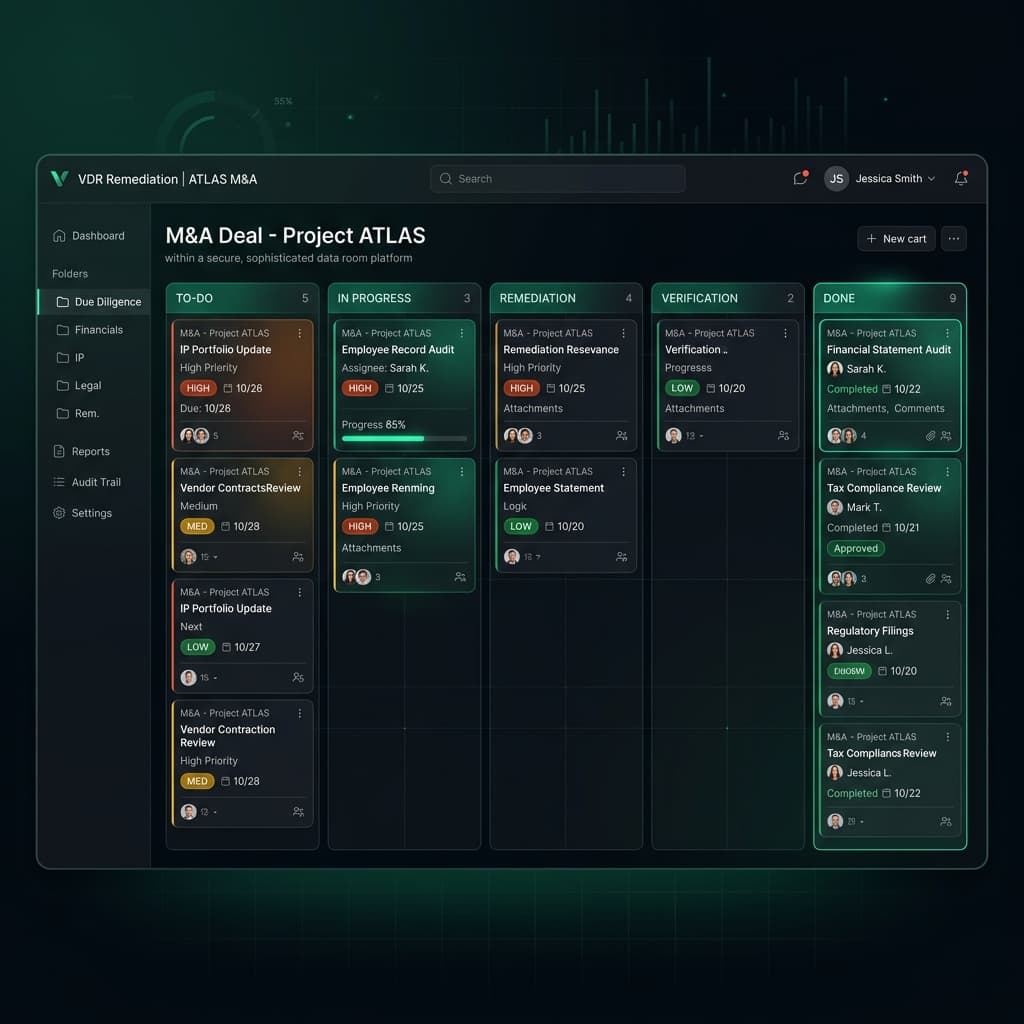
Convert diagnostic risk findings into white-labeled seller remediation workflows.

Guide draft output tone with your boutique firm's custom brand vocabulary rules.
Read advanced articles written by tech corporate advisors covering escrow, EBITDA multiples, and transaction logs.
 M&A Diligence
Step-by-step best practices to structure folders, manage user permissions, and ensure secure buyer access.
 Valuation
A practical breakdown of valuation approaches owners and advisors use before a sale process.
 Deal Structuring
How AI-assisted CIM workflows reduce drafting time while keeping deal materials consistent.