Financial Books Standing
Audited financial books eliminate buyer risk of earnings fraud, accelerating transaction diligence and preventing clawbacks.
Measure your company's transaction viability index. Evaluate audit standing, customer concentration risk, management team autonomy, and legal contract assignability.
Evaluate key enterprise sell-ability variables and identify critical hurdles
Institutional readiness index for M&A deal execution.
Companies with scores above 80 points routinely fetch 15% - 25% valuation premiums due to lower friction in operational transitions and low legal risk.
Get an instant AI-powered transition analysis with recommended action steps based on your metrics.
Audited financial books eliminate buyer risk of earnings fraud, accelerating transaction diligence and preventing clawbacks.
Businesses with a client accounting for >30% of sales face steep multiple discounts. Buyers protect risk by structuring heavy earn-outs.
Buyers buy cash-generating systems, not jobs. Decentralizing management from the founder increases valuation multiples.
Exit readiness refers to the structural and operational preparation of a company ahead of an equity sale or recapitalization. A highly ready company is structured in a way that minimizes transaction risk, guarantees a seamless handover to the acquirer, and allows due diligence teams to verify facts quickly without uncovering unexpected hurdles.
Achieving a high transaction readiness score requires focusing on several core organizational dimensions:
AIVI empowers boutique M&A firms and investment banks to generate CIMs, conduct instant VDR gap checks, and manage exit readiness automatically from a unified data model.
Identifying blockers through a structured self-test allows founders to execute de-risking campaigns 6–12 months prior to transaction launch. Building institutional infrastructure, decentralizing customer relations, and preparing full CPA audits directly translates into a 15% to 25% transaction premium and decreases the duration of escrow periods.
Quantify Enterprise Values, verify due diligence books, and estimate strategic synergy premiums in real-time.
Model Enterprise Value and EBITDA multiples based on cash-flow parameters.
Reconcile VDR files and CIM statements to check QofE due diligence clawbacks.
Verify exit-readiness parameters, customer concentrations, and legal roadblocks.
Estimate annual cost reductions and customer cross-sell synergy values.
Leverage branded diagnostic assessments, AI drafting tools, and shared client collaboration channels.

Turn exit diagnostics into structured Confidential Information Memorandums automatically.

Mapstrategic buyer synergies and justify exit premium values across 6 dimensions.
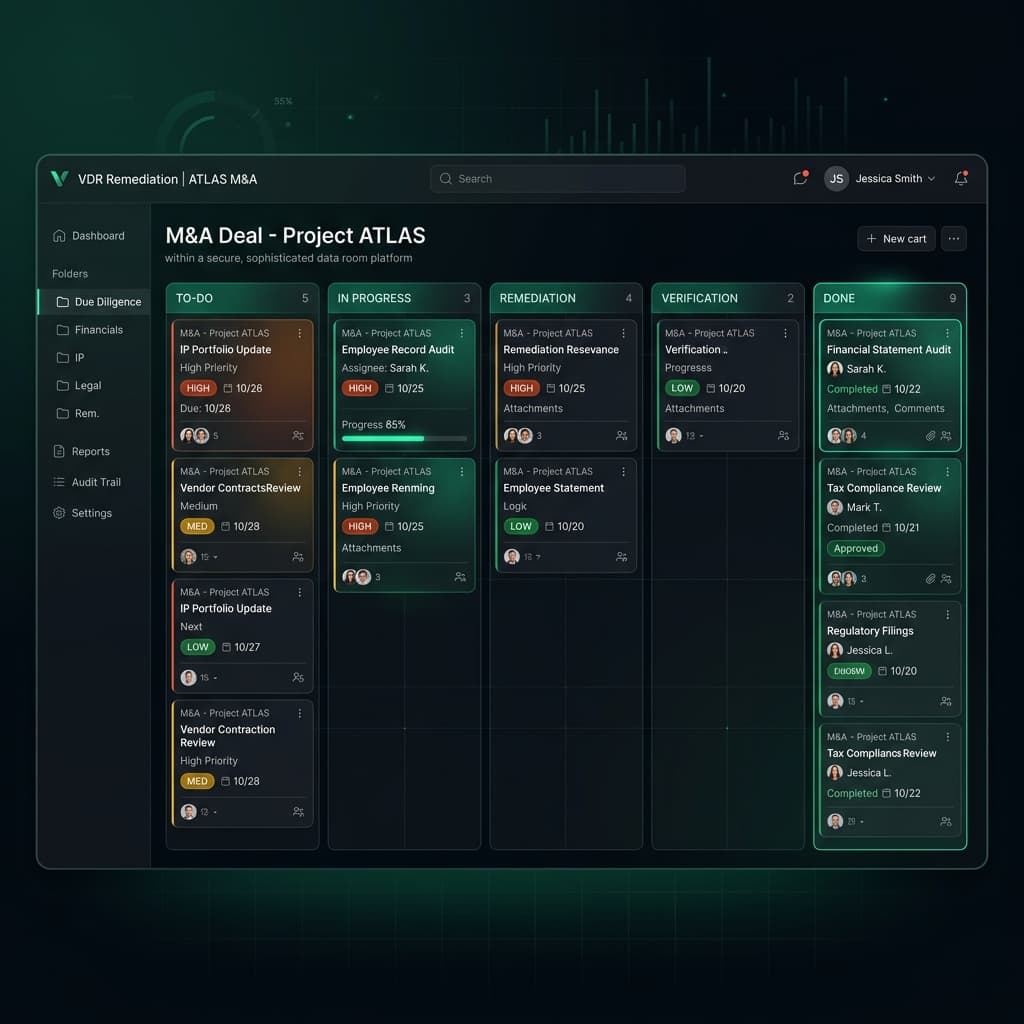
Convert diagnostic risk findings into white-labeled seller remediation workflows.

Guide draft output tone with your boutique firm's custom brand vocabulary rules.
Read advanced articles written by tech corporate advisors covering escrow, EBITDA multiples, and transaction logs.
 M&A Diligence
Step-by-step best practices to structure folders, manage user permissions, and ensure secure buyer access.
 Valuation
A practical breakdown of valuation approaches owners and advisors use before a sale process.
 Deal Structuring
How AI-assisted CIM workflows reduce drafting time while keeping deal materials consistent.