CIM to VDR Consistency Check
Buyers cross-check marketing CIM stats against VDR books. Unreconciled gaps destroy trust and lead to valuation adjustments.
Audit your data room materials for transaction hazards. Uncover omitted hosting fees, contractor expenses, and executive addback risks before buy-side due diligence begins.
Audit data-room disclosures for buy-side due diligence gaps
Proportion of unallocated liabilities to total EBITDA.
If the buyer's Quality of Earnings (QofE) firm uncovers missing hosting COGS or contractor liabilities, they apply exit multiple discounts on the omitted amount.
Get an instant AI-powered compliance analysis of CIM-to-VDR ledger gap remediation.
Buyers cross-check marketing CIM stats against VDR books. Unreconciled gaps destroy trust and lead to valuation adjustments.
Boutique advisors audit internal financial consistency before launch, identifying inventory discrepancies or deferred revenues.
Spotting financial gaps early allows advisors to reconcile variance reports, preventing buyer retrades during exclusive negotiation windows.
During the sell-side process, a Confidential Information Memorandum (CIM) is distributed to prospective buyers detailing the target company's adjusted financial metrics. Once an Letter of Intent (LOI) is signed, buyers gain access to the Virtual Data Room (VDR). Discrepancies between the CIM representations and the raw ledger documents in the VDR represent the single most common cause of deal failure or severe purchase price renegotiation.
Buy-side accounting firms conduct a rigorous Quality of Earnings (QofE) investigation to verify every dollar of declared profit. If they identify omitted expenses, they adjust EBITDA downward:
Every dollar of missing cost does not just cost a dollar at closing. Because corporate valuation is based on multiples, a $100,000 unallocated hosting cost on a 6x EBITDA multiple results in a pre-emptive clawback value loss of $600,000. Undergoing a pre-sale financial consistency audit ensures your books are reconciled at the transaction level before buyer outreach.
Quantify Enterprise Values, verify due diligence books, and estimate strategic synergy premiums in real-time.
Model Enterprise Value and EBITDA multiples based on cash-flow parameters.
Reconcile VDR files and CIM statements to check QofE due diligence clawbacks.
Verify exit-readiness parameters, customer concentrations, and legal roadblocks.
Estimate annual cost reductions and customer cross-sell synergy values.
Leverage branded diagnostic assessments, AI drafting tools, and shared client collaboration channels.

Turn exit diagnostics into structured Confidential Information Memorandums automatically.

Mapstrategic buyer synergies and justify exit premium values across 6 dimensions.
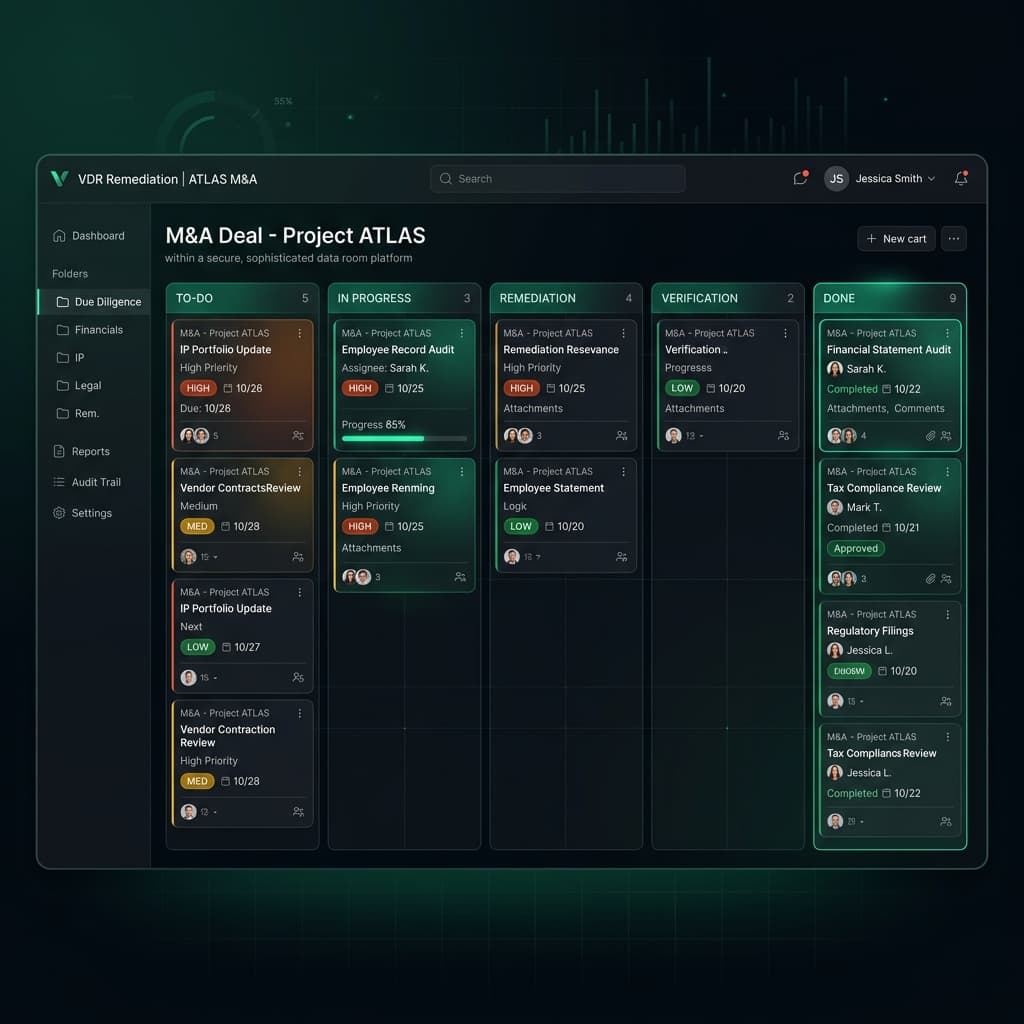
Convert diagnostic risk findings into white-labeled seller remediation workflows.

Guide draft output tone with your boutique firm's custom brand vocabulary rules.
Read advanced articles written by tech corporate advisors covering escrow, EBITDA multiples, and transaction logs.
 M&A Diligence
Step-by-step best practices to structure folders, manage user permissions, and ensure secure buyer access.
 Valuation
A practical breakdown of valuation approaches owners and advisors use before a sale process.
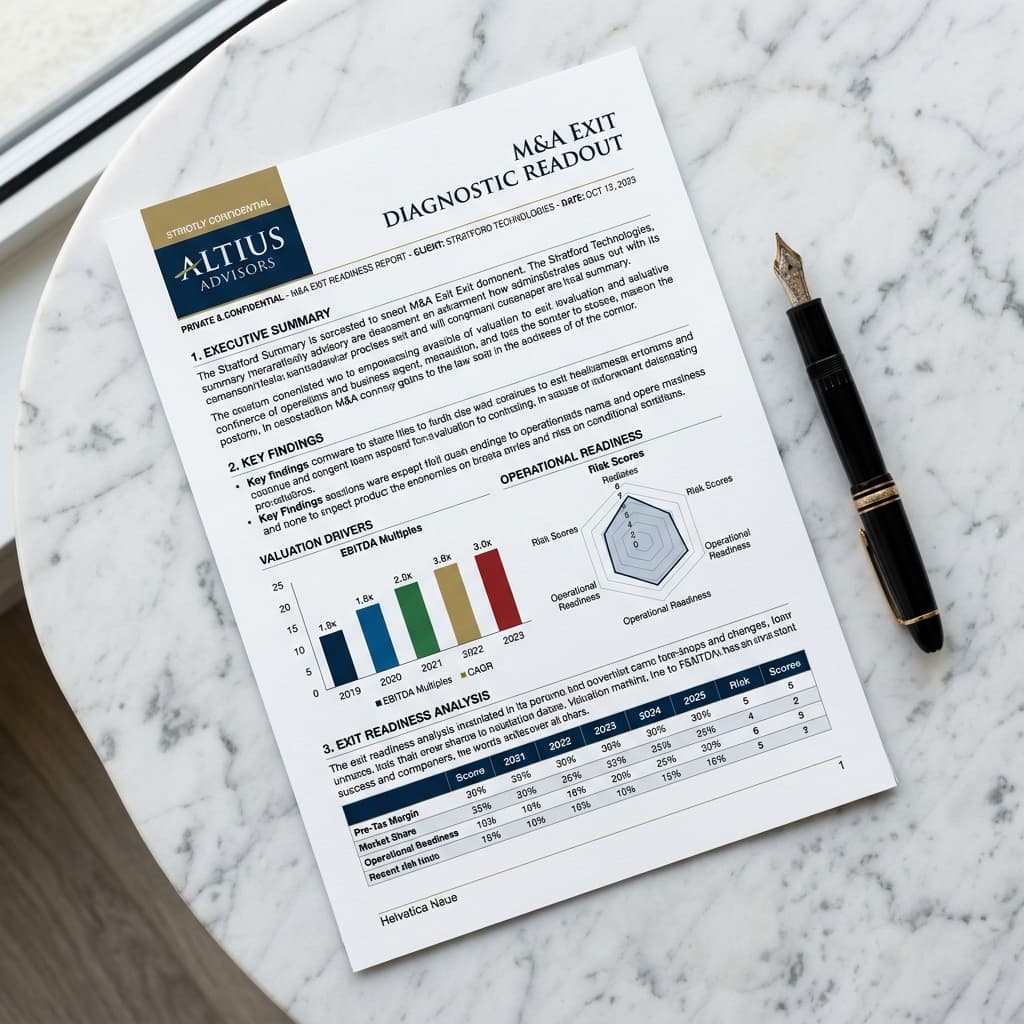 Deal Structuring
How AI-assisted CIM workflows reduce drafting time while keeping deal materials consistent.